The Promise vs. Reality
There's a lot of noise about AI transforming software development. Tools like GitHub Copilot, Claude, and GPT-4 have become fixtures in many engineering workflows. But after a year of intensive use across dozens of client projects, we've developed a nuanced view that's worth sharing.
The truth is more complex than either the skeptics or the evangelists suggest. AI genuinely accelerates certain types of work while actively hindering others.
Where AI Genuinely Helps
Boilerplate and repetitive code. This is where AI shines brightest. Writing CRUD endpoints, form validations, test scaffolding — these tasks that used to consume junior developer time now take minutes.
Documentation generation. AI can produce serviceable documentation from code, though it requires editing. We typically save 60-70% of documentation time this way.
Code translation and migration. Moving between frameworks or languages? AI handles the mechanical translation well, leaving engineers to focus on architectural decisions.
Debugging assistance. Explaining error messages, suggesting fixes for common issues — AI acts as a knowledgeable colleague available at any hour.
Where AI Falls Short
Architectural decisions. This is critical. AI will happily generate code for whatever architecture you describe, but it cannot tell you whether that architecture is appropriate for your scale, team, or constraints.
Context-dependent tradeoffs. Should you use microservices or a monolith? PostgreSQL or MongoDB? AI gives generic advice. Senior engineers give answers based on your specific situation.
Code review for subtle issues. AI catches syntax and obvious bugs. It misses the subtle performance implications, the security edge cases, the maintainability concerns that experienced engineers spot.
Long-term system thinking. AI has no memory of your system's evolution. It doesn't know that this "simple" change will break the integration you built six months ago.
Our Approach: AI-Accelerated, Human-Led
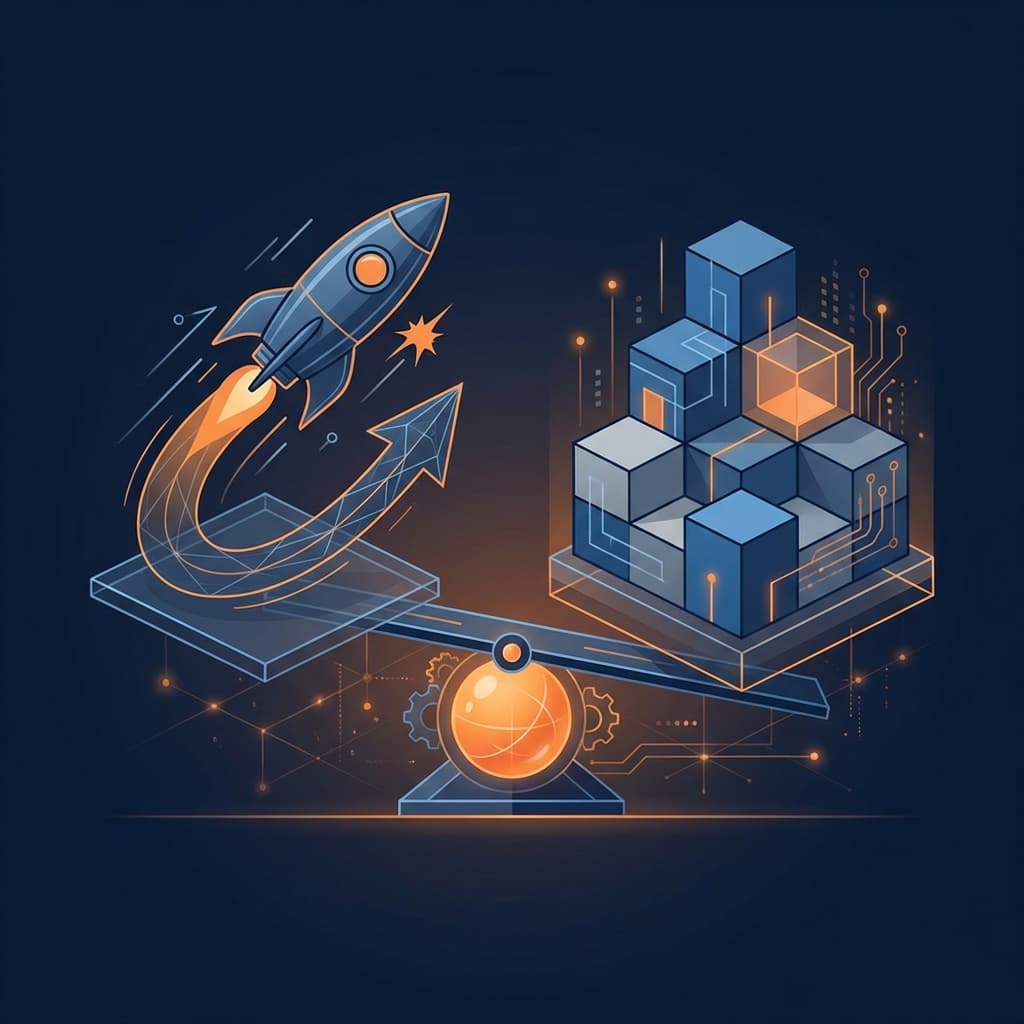
We've settled on a clear model: AI accelerates execution, but senior engineers lead decisions.
Every line of AI-generated code goes through human review. Not cursory review — thorough code review by engineers who understand the full system context.
The result? We ship 30-40% faster without sacrificing quality. But that number only holds because we're selective about where we apply AI.
Want to see how we integrate AI into production workflows? Learn more about our AI integration services or explore how we build software products.